Why Efficient Seed Distribution Is the Next Big Win for UK Farmers
The Window That Decides the Season
Every farmer knows the feeling. The soil is finally dry enough, the forecast looks steady, and there are maybe three good days to get the seed in. Then the wind picks up, or the rain returns, and that window closes. In UK Agriculture, where the weather can flip from settled to soggy in a few hours, the speed and accuracy of planting often matter as much as the seed itself.
That is why efficient seed distribution has become a talking point in farmyards from Cornwall to the Borders. It is not just about covering acres quickly. It is about placing the right amount of seed in the right place, at the right time, without wasting a single kilogram. When done well, it lifts establishment, cuts costs, and reduces the pressure on the whole rotation.
From Drills to Drones: The Tools Have Changed
For years, the seed drill was the only serious option. Seed Drilling into a prepared seedbed remains the gold standard for many crops, especially cereals and oilseed rape. It gives precise depth control and good seed-to-soil contact. But drills are heavy, slow to move between fields, and they can struggle on wet ground without causing compaction.
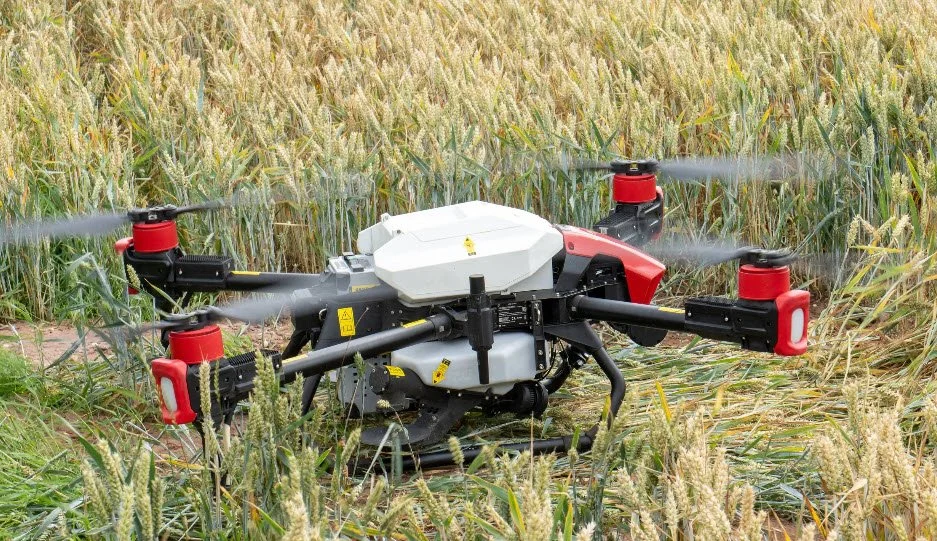
That is where aerial seeding has stepped in. Drones like the DJI Agras T30 have made broadcast seeding from the air a practical alternative for a growing number of UK growers. Instead of waiting for the ground to dry enough to carry a tractor, you can fly the seed on when conditions are borderline. The drone spreads seed evenly over the surface, and then a light harrow or roll can work it in where needed. On steep or awkward fields, it is often the only sensible way to get the job done without risking machinery.
This shift is part of a wider movement toward Precision Agriculture. The goal is to apply inputs only where they are needed, and drones fit that philosophy neatly. They can follow GPS Guidance to the centimetre, vary the rate across the field, and log exactly what went where. That data is gold when you are trying to understand which strips of the field are underperforming and why.
What Efficient Seed Distribution Actually Looks Like
It is tempting to think that efficient seed distribution simply means spreading seed as fast as possible. In reality, it is more nuanced. It means matching the seeding rate to the potential of each part of the field. It means using the right technique for the crop and the conditions. And it means making sure every seed has the best chance of becoming a plant.
Variable Rate Seeding is a perfect example. Instead of one blanket rate across a field, the drone or drill adjusts the rate on the move, based on soil maps, yield history, or even live sensor data. A patch of sandy ground with low Soil Organic Matter might get a higher rate because establishment is likely to be poor. A heavier, more fertile area might get a lower rate because the plants will tiller or branch more vigorously. The result is a more uniform crop and no wasted seed.
Broadcast Seeding, whether from a drone or a spinner, has its own place. It is quick, and it works well for cover crops, grass leys, and some spring crops. The trade-off is that seed is left on the surface, where it depends on rain and good contact with the soil. That is why seed coating has become more important. A decent coating can hold moisture around the seed, deter pests, and even carry a starter dose of nutrition. For legumes, a Legume Inoculant coating ensures the right bacteria are there to fix nitrogen from the air, which is a big deal for organic and low-input systems.
The Drone Advantage in Practice
I have watched a drone operator cover a 10-hectare field of cover crop seed in under an hour. The same job with a tractor-mounted spinner would have taken the best part of a morning, and the tractor would have left wheel marks that later showed up as uneven growth. The drone did not touch the soil, so there was no compaction, and the seed distribution was remarkably even, even on a gentle slope where a spinner tends to throw seed further downhill.
That is the kind of real-world benefit that is hard to argue with. Drones like the Agras T30 are not just for spraying anymore. They are becoming multi-purpose tools for spreading seed, fertiliser, slug pellets, and even beneficial insects. And when you pair them with Flight Planning Software, you can pre-programme the whole job, set the swath width, and let the drone do the thinking. The software works out the most efficient flight lines, avoids obstacles, and ensures the edges are covered properly.
RTK Correction takes the positioning accuracy to the next level. With real-time kinematic correction, the drone knows its position to within a couple of centimetres. That matters when you are seeding into standing stubble or trying to hit a specific strip between rows. It also means the drone can return to the exact same line later in the season for spraying or monitoring, which saves time and reduces overlap.
Beyond the Field: Rules, Regs, and Common Sense
None of this happens in a vacuum. In the UK, any drone use for commercial purposes has to follow the Civil Aviation Authority rules, and there are extra considerations when flying over or near livestock, watercourses, or public footpaths. The Rural Payments Agency and Natural England have their own expectations around environmental schemes, and some of those schemes now actively encourage precision application of inputs to reduce runoff and protect biodiversity.
That is another reason efficient seed distribution matters. When you spread seed accurately, you are less likely to have seed washing into ditches or getting blown into headlands. You are also less likely to over-apply, which is good for the budget and good for the environment. The same logic applies to spraying, and here the move toward Ultra-low Volume Spraying is worth noting. By using finer droplets and tighter control, you can get good coverage with less water and less chemical. That means fewer refills, less time in the field, and a smaller carbon footprint per pass.
No-Till and the Changing Soil Story
The rise of No-till Farming has also opened the door for aerial seeding. When you are trying to build Soil Organic Matter and keep the soil structure intact, the last thing you want is a heavy drill slicing through the soil every autumn. A drone can drop seed into standing stubble or a cover crop without disturbing the soil at all. The next pass might be a light harrow or just the natural freeze-thaw action of winter to work the seed in.
Some growers are even using drones to overseed into an established crop, something that is almost impossible with a drill. For example, you can fly clover seed into a standing wheat crop in the spring, and the clover will establish under the canopy, ready to fix nitrogen for the next crop. That is a clever way to build fertility without an extra pass.
Of course, aerial seeding is not a perfect substitute for drilling in every situation. Depth is still a challenge. If a crop really needs to be buried at 3 centimetres, a drone cannot do that. But for many situations, especially cover crops and grass, surface seeding is perfectly adequate, and the time saved can be huge.
Making It Work on Your Farm
So how do you actually get started? The first step is to look at your own fields and decide where efficient seed distribution could make a difference. Maybe it is a wet patch that you always struggle to drill in autumn. Maybe it is a steep bank that is dangerous for a tractor. Maybe it is a cover crop that you keep putting off because there are only two weeks between harvest and the next crop going in.
Next, think about the equipment. You do not need to buy a drone outright if you are not ready. Many contractors now offer aerial seeding as a service, and it is often cheaper than you think once you factor in the diesel, labour, and wear and tear on the drill. If you do decide to buy, the DJI Agras range is popular for good reason, but you need to check the latest CAA permissions and make sure you have the right training.
Finally, remember that the technology is only as good as the planning. Use Flight Planning Software to map out the field, set the rates, and record what you did. Compare that data with your yield maps at harvest. You will soon see which parts of the field responded well and which ones need a different approach next year. That is the real value of Precision Agriculture: not just doing things differently, but learning from what you did.
At the end of the day, efficient seed distribution is about making the most of every seed and every hour you have. With the weather getting more unpredictable and margins staying tight, that is not a luxury. It is a necessity. The farmers who embrace it, whether through drones, better variable rate control, or simply smarter planning, will be the ones who keep their fields productive and their businesses resilient for years to come.